
Call Us Now : 706-889-2065


Irrigation
Water Delivery Systems for Mountain Landscapes
Irrigation in Ellijay for luxury mountain properties with seasonal water availability and terrain challenges
Mountain properties in North Georgia face irrigation challenges that flat suburban lots don't encounter—steep slopes that cause uneven water distribution, seasonal drops in well yield during late summer, and elevation changes that affect water pressure across zones. Standard sprinkler installation designed for level residential lawns fails quickly when applied to luxury mountain landscaping, leaving some areas oversaturated while others receive insufficient water. Strategic irrigation design accounts for terrain, available water sources, and the specific plant material used in high-end mountain landscapes, creating systems that maintain the aesthetic investment property owners make in their grounds.
Irrigation system design for mountain properties begins with evaluating water sources—well capacity, spring flow, or municipal connection—and determining pressure and volume available at different elevations across the property. Zones are planned to match plant water requirements and slope conditions, with emitter types and spacing selected for terrain rather than installed in generic grid patterns.
Request a property evaluation to assess water availability, pressure conditions, and zone requirements for your mountain landscape.

What Luxury Mountain Irrigation Systems Include
Luxury mountain irrigation goes beyond basic coverage to address the specific conditions each landscape zone presents. Drip irrigation works well on slopes where sprinkler runoff would waste water and cause erosion, delivering moisture directly to root zones without creating surface flow. Areas with significant elevation change may require pressure regulators or booster pumps to maintain consistent flow across all zones. Controllers are programmed with zone-specific run times that account for sun exposure, slope, and soil type rather than running all zones for identical durations.
After installation, you'll see consistent plant health across your property without the dry patches or waterlogged areas that indicate poor system design. Water usage stays within your source capacity even during peak summer demand, and the system adapts to North Georgia's variable seasonal water availability. Maynard Earthworkx LLC designs irrigation for luxury mountain properties with an understanding that these systems must perform reliably while preserving the natural aesthetic that makes mountain homes distinctive.
The work includes selecting components rated for continuous outdoor exposure and pressure fluctuations common in mountain water systems. With a perfect track record over 23 years and a faith-based, family-owned approach, the company brings attention to detail that multi-million dollar mountain homes require.
Frequently Asked Irrigation Questions
Owners of luxury mountain properties often want to understand how irrigation design differs from standard residential systems and what determines long-term performance in North Georgia's mountain environment.
-
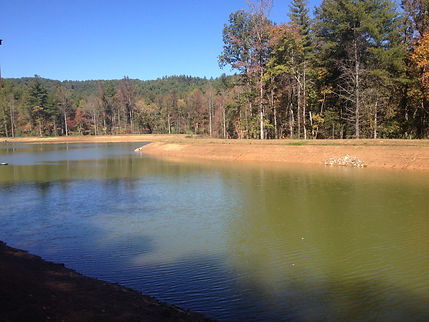
What water source works best for mountain property irrigation? Wells are most common and work well if yield exceeds peak irrigation demand by a comfortable margin, but some mountain properties use spring-fed storage tanks or ponds to provide irrigation water without stressing well capacity. Municipal water connections offer consistent pressure but at higher operating cost for large landscape areas.
-
How does slope affect irrigation system design in Ellijay and Blue Ridge? Steep slopes require drip irrigation or low-precipitation-rate sprinklers to prevent runoff, since water applied faster than soil can absorb it simply runs downhill and pools at lower elevations. Zones on slopes also need shorter run times than flat areas to deliver the same effective moisture.
-
When should irrigation systems be installed during landscape development? Irrigation lines should go in after rough grading and before final planting, allowing trenches to be cut without damaging established plants while ensuring the system is functional when new plantings need regular water. Installing irrigation after planting risks root damage and complicates trenching around existing landscape features.
-
What makes mountain irrigation systems fail or underperform? Common failures include inadequate pressure for the elevation change involved, zones that mix high and low water demand plants, and controllers programmed without accounting for slope and sun exposure differences. Well capacity that seemed adequate during wet seasons may prove insufficient during dry summer periods when irrigation demand peaks.
-
How often do mountain irrigation systems require maintenance? Systems should be inspected each spring before the growing season begins, checking for winter damage to exposed components, clogged emitters, and proper zone function. Filters need cleaning or replacement depending on water quality, and controllers require battery or programming updates as needed.
Maynard Earthworkx LLC serves luxury mountain properties across North Georgia with the same commitment to going above and beyond that has produced zero customer complaints over more than two decades in business. Contact the company to schedule a consultation on your mountain property irrigation needs.