
Call Us Now : 706-889-2065

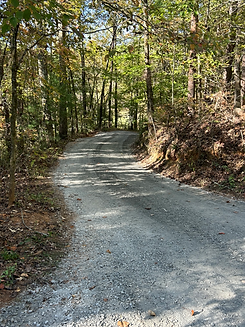
Roads
Private Access That Functions Year-Round
Roads in Ellijay for mountain properties and luxury developments requiring engineered year-round access
Engineered access solutions for mountain properties differ fundamentally from basic gravel road construction. North Georgia's steep terrain, seasonal freeze-thaw cycles, and heavy rainfall events place demands on private roads that only proper engineering and construction can meet. Maynard Earthworkx LLC builds private roads for mountain properties and luxury developments throughout Ellijay, Dahlonega, Morganton, and surrounding high-elevation communities, with 23 years of experience constructing access routes that remain passable regardless of weather conditions. These roads serve everything from single luxury estates to multi-home developments where reliable access directly affects property values and usability.
Road construction in mountainous terrain requires establishing stable subgrade, building aggregate base in compacted layers, and integrating drainage systems that intercept and redirect water before it undermines the roadbed. The process involves more than spreading gravel on cleared ground—it demands understanding how water moves, where soil will fail under load, and how grade affects long-term stability.
Schedule an on-site consultation to review your property's topography, access requirements, and drainage considerations.

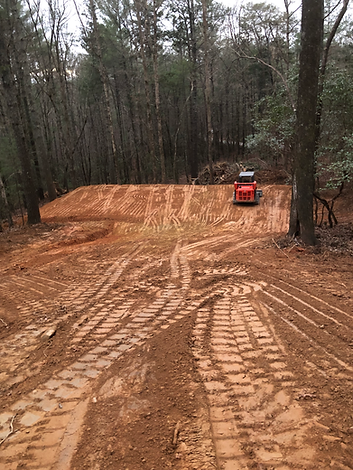
How Mountain Roads Are Engineered for Durability
Road construction begins with route surveying to minimize grade while maintaining acceptable alignment for the vehicles that will use it—passenger cars for residential access or heavier equipment for properties under development. Excavation extends to stable subgrade, removing organic material and unsuitable soil that would compress and settle under traffic loads. Aggregate base goes down in lifts of six to eight inches, with compaction equipment working each layer before the next is placed, creating a dense structure that won't deform or develop potholes.
Maynard Earthworkx LLC installs cross-drains and culverts at intervals calculated from the road's grade and the drainage area feeding each section, preventing water from running down the road surface and eroding the base. You'll notice that completed roads shed water quickly during storms, with runoff directed into vegetated areas or engineered channels rather than allowed to concentrate and cut ruts.
After construction, the road surface remains firm and level without the washboard texture, potholes, or edge failure that develops on roads built without adequate base or drainage. Winter ice melts faster on properly crowned surfaces, and spring rains don't leave standing water or soft spots that bog down vehicles. For luxury mountain developments, this construction quality supports property access and maintains the aesthetic expected in high-end residential settings.
Answers to Road Construction Questions
Owners developing mountain properties or managing existing private roads often need clarity on construction standards, maintenance requirements, and how terrain affects design decisions.
-
What width should a private mountain road be for safe year-round use? Single-lane mountain roads typically run ten to twelve feet wide with turnouts every two hundred to three hundred feet for passing, while two-lane roads require eighteen to twenty feet of width. Wider roads cost more to build and maintain but improve safety and convenience, particularly for properties expecting regular traffic or heavy vehicles.
-
How does North Georgia's clay soil affect road construction? The red clay common throughout Ellijay and surrounding mountain counties becomes slippery and unstable when saturated but provides excellent load-bearing capacity when properly compacted and protected from water infiltration. Successful road construction requires keeping water out of the subgrade through crowned surfaces and functional drainage features.
-
When should roads be built relative to other site development work? Roads should be constructed after clearing and rough grading but before home construction begins, providing stable access for concrete trucks, framing deliveries, and other heavy equipment. Building roads too early risks damage from construction traffic, while waiting too long creates access problems during the building phase.
-
What ongoing maintenance do mountain roads require? Mountain roads need periodic grading to restore crown and remove material that accumulates in drainage features, plus gravel replenishment every few years to replace surface material lost to traffic and weather. Culverts and cross-drains require inspection after major storms to remove debris and maintain flow capacity.
-
How steep can a private road be while remaining functional? Most mountain roads stay below fifteen percent grade for safe vehicle operation, though short sections up to eighteen percent are manageable with proper traction surface and drainage. Roads serving luxury mountain homes generally target gentler grades for comfort and to accommodate a wider range of vehicles.
Maynard Earthworkx LLC maintains a perfect five-star rating built on a family-owned, faith-based commitment to going above and beyond for customers. The company has built roads through challenging mountain terrain across North Georgia with zero complaints over more than two decades. Reach out to discuss your private road project and arrange a property visit.