
Call Us Now : 706-889-2065

Driveways
Access Routes Built for Mountain Grades
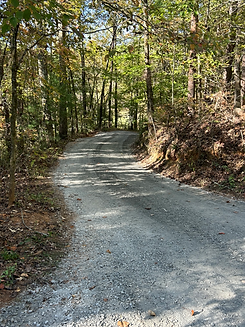
Driveways in Ellijay for steep terrain and year-round access to mountain properties
A driveway cut into North Georgia mountain terrain must handle grades that exceed fifteen percent in many locations, resist washout from concentrated runoff during heavy rain, and remain passable during winter ice events. Standard residential paving methods fail quickly when applied to these conditions—surface water carves channels through gravel, freeze-thaw cycles crack asphalt on steep slopes, and inadequate base preparation leads to settling and failure. Maynard Earthworkx LLC constructs mountain driveways engineered for the specific challenges of properties in Ellijay, Jasper, Blairsville, and the surrounding high-elevation areas, with particular expertise in access routes serving luxury mountain homes and remote building sites.
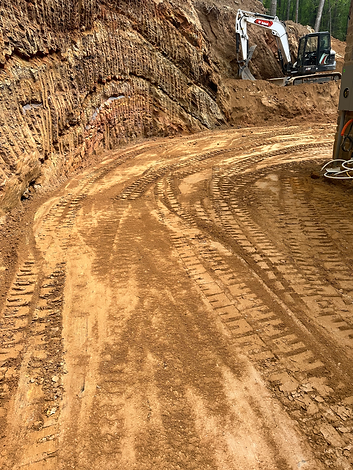
Driveway construction on mountain terrain involves excavating to stable subgrade, installing aggregate base in compacted lifts, and shaping the surface to shed water without allowing it to concentrate and erode. Proper drainage features—culverts, cross-drains, and crowned surfaces—are integrated during construction rather than added as afterthoughts.
Request a site evaluation to assess grade, drainage, and base requirements for your mountain property driveway.

What Proper Mountain Driveway Construction Requires
Mountain driveway construction begins with analyzing the route's grade profile and identifying points where water will concentrate during rain events. Excavation extends below the frost line and into undisturbed soil or bedrock that won't shift under load. Aggregate base is placed in layers, with each lift compacted before the next is added, creating a stable structure that distributes vehicle weight and resists deformation. Surface material—whether crusher run gravel, asphalt, or concrete—is applied with crown or cross-slope to move water off the driving surface before it can penetrate and weaken the base.
After construction, your driveway maintains consistent width and grade without the ruts, washouts, or settling common to improperly built mountain access routes. Water runs off the surface during storms rather than pooling or cutting channels, and the base remains stable under repeated use by heavy vehicles. For properties serving multi-million dollar mountain homes, this level of construction prevents the ongoing maintenance costs and access disruptions that come with driveways built to inadequate standards.
The work includes installing drainage structures sized for North Georgia's intense summer storms and positioned to intercept runoff before it gains erosive velocity. Maynard Earthworkx LLC has maintained a perfect customer satisfaction record over 23 years, with zero complaints on projects ranging from short residential drives to extended access routes serving remote luxury properties.
Common Driveway Questions for Mountain Properties
Property owners facing challenging access conditions often ask about construction methods, materials, and what determines driveway longevity on steep terrain.
-
What base depth is required for a mountain driveway? Base depth depends on soil type and grade, but most North Georgia mountain driveways require twelve to eighteen inches of compacted aggregate base to remain stable under load and resist frost heave. Steeper sections or areas with poor subgrade may need additional depth or geotextile reinforcement.
-
How are steep grades managed without creating erosion problems? Steep driveway sections require cross-drains or water bars installed at intervals to intercept runoff and divert it off the driving surface before it accumulates enough volume and velocity to erode gravel or undercut pavement. The spacing between drainage features decreases as grade increases.
-
When should asphalt be used instead of gravel on mountain driveways? Asphalt works well on grades up to twelve percent and where a sealed surface is desired, but steeper sections often perform better with high-quality crusher run gravel that provides better traction and doesn't develop the cracking and sliding issues asphalt experiences on extreme slopes. Many luxury mountain properties use a combination, with asphalt on flatter sections near the home and gravel on steeper access portions.
-
What makes driveways fail on mountain properties in Ellijay and Blue Ridge? Most failures result from inadequate base preparation, insufficient drainage, or using surface materials not suited to the grade. Water that penetrates the surface softens subgrade, leading to rutting and washouts, while freeze-thaw cycles break apart surfaces without proper base support.
-
How long does a properly constructed mountain driveway last? A well-engineered mountain driveway with adequate base and drainage features should remain functional for fifteen to twenty years with routine maintenance, though surface material may require periodic replenishment or resurfacing depending on traffic volume and winter weather severity.
Maynard Earthworkx LLC specializes in remote mountain properties with access challenges, bringing a family-owned, faith-based approach that prioritizes going above and beyond for every customer. Contact the company to discuss your driveway project and schedule an on-site assessment.